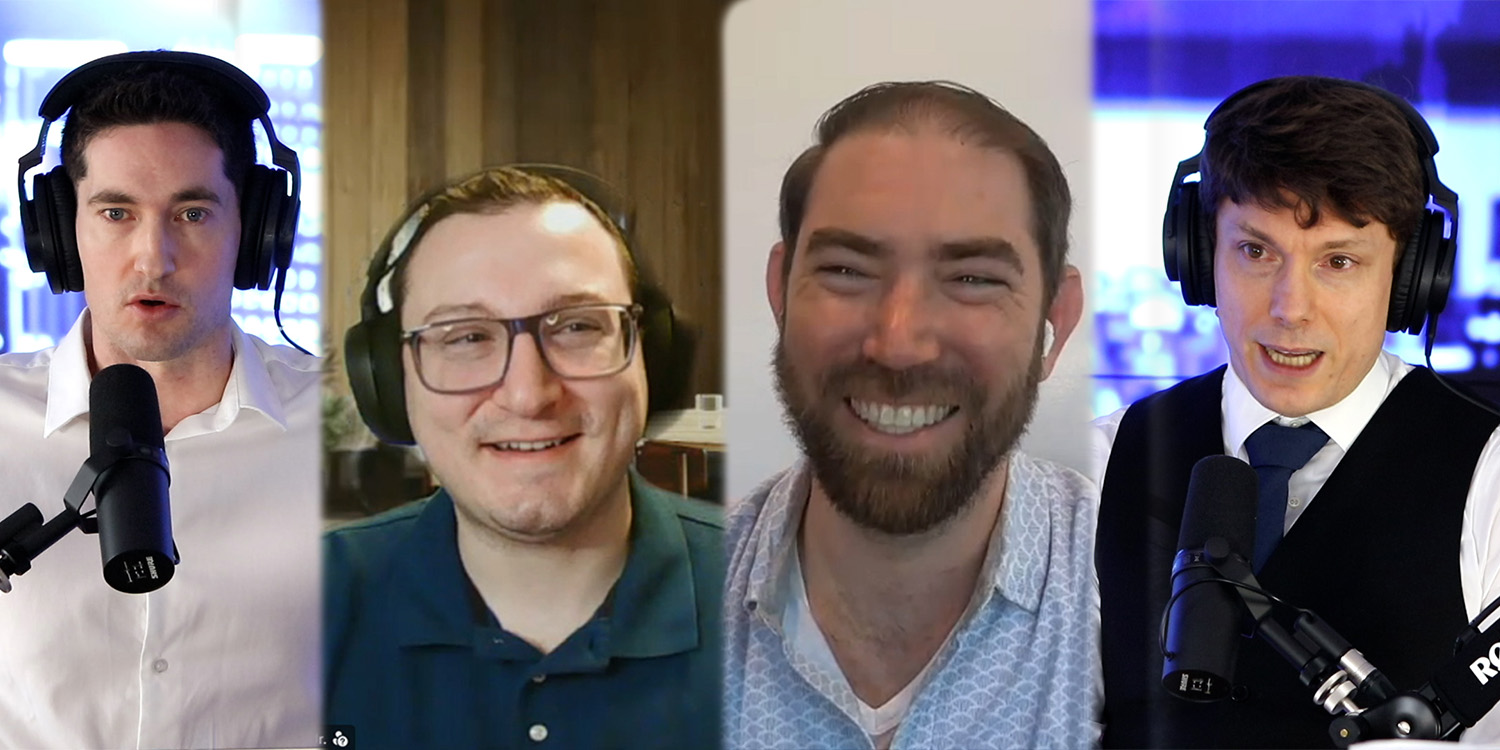
00:00:00 S&OP の隠れたコスト
00:00:21 Milos Vrzic が会話に参加
00:01:40 Universo の説明:時計針製造 conglomerate
00:02:20 時計の逸話と個人的な関係
00:03:30 S&OP の定義:demand、supply、finance を合わせる
00:04:50 隠れたコスト:inaction の cost
00:06:00 inaction は遅延と悪い decision を生む
00:07:02 meeting cadence は不可避の decision lag を作る
00:08:55 decision は下へ cascade し quality が落ちる
00:11:40 budget は粗く政治化された constraint
00:15:00 SNOP vs operations:tactical と operational
00:17:00 formalism は math ではなく business driver を反映すべき
00:22:00 constraint 適用前に strategic lever を simulate する
00:33:00 economic driver の ownership で politics を避ける
00:43:30 operational choices を automate し、SNOP は alignment に使う
00:47:00 flow manager が outlier を監視し recipe を調整
00:49:55 AI/LLM は助けるが judgment を置き換えない
00:52:00 LLM は busy work を明らかにし synthesis が得意
00:59:15 多くの crisis は避けられる firefighting
01:03:37 結び:つながりを保ち S&OP practice を改善する
概要
流行の S&OP は、実際には高価な coordination ritual であることが多く、本当の cost は indecision です。meeting は slide を増やし、難しい decision は延期され、より少ない visibility と authority しかない人へ下りていきます。S&OP は trade-off を明確にし、ownership を割り当て、automated accountable operations を可能にする時だけ価値があります。
詳細概要
S&OP は management panacea のように語られますが、隠れた価格は見える headcount よりも、下されない decision にあります。月次や四半期 cycle は設計上 lag を作ります。さらに budget や arbitrary cap が economics を置き換えると、discipline ではなく politics が生まれます。
より良い世界は real driver の ownership から始まります。cost of capital、poor service の cost、lead time、price、delay を明確に持たせることです。operation では routine decision を automate し、人間は spreadsheet error ではなく flow と少数の高リスク trade-off を扱うべきです。
全文書き起こし
Conor Doherty: This is supply chain breakdown and today we will be breaking down the hidden cost of S&OP. Now today is an extra special day because joining Joannes in studio no less is friend of the channel and honestly I like to think now friend in real life.
Milos Vrzic: Correct.
Conor Doherty: Milos Vrzic. Milos good to have you in the studio. Thank you for coming.
Milos Vrzic: Thanks for having me over. So this is people who might might not be aware but this is actually your second time on Lokad. Two yearsish ago you did the inaugural debate. You were the only person who accepted that challenge by the way to debate Joannes on S&OP.
We stayed in touch and when I decided oh we should do a breakdown a live episode on S&OP. You were the first name I reached out to you and you very graciously agreed to actually come to Paris and meet us.
Yeah that’s that’s what that’s the right way to put it. The other real way to put it is just an excuse to meet each other. That was that was the real reason why we’re all here. And yeah, so I’m I’m very happy to be here. Like you said, it was inaugural debate on S&OP, which this isn’t. This is not a debate at all.
Not a debate. Um yeah, I’m very happy to be here. This is awesome.
Conor Doherty: Great. Um bit of just a bit of context for anyone who didn’t see the first debate because again that was two years ago.
You are head of supply chain at Universo. Do you want to introduce for people who don’t know who you are?
Milos Vrzic: Right. So, I’m head of supply chain at a company called Universo. They’re watch hand manufacturers in the Swatch Group. So, that’s a huge conglomerate of brands.
Most of them you might have heard of from Breguet, Omega, Longines, Tissot all the way down to something called Flik Flak, which is kids watches. And the really interesting thing about Universo is that we make watches I mean watch hands for all the industries. So we have four or five different production lines which are completely different.
I mean yes there’s brass in one end and then watch hands come out the other but those are very different production procedures. It’s a B2B business. So it’s quite interesting because I say that within those four walls the only thing we don’t have is a zinc and copper mine so that we could have our own brass but everything else is inhouse and it’s uh it’s fantastic to be there.
So that’s Universo. Oh, I think I see you’re wearing a
Conor Doherty: Yes, I’m wearing an Omega. This is not a plug for the brand, but yes, it is on a NATO strap, I might add. On a strap, which be sacrilegious to some horologists, I’m sure.
Milos Vrzic: No, not at all. Hey, that’s the thing. If you knew about watches, you’d be like, “This is the stuff.”
Conor Doherty: Okay. You said my watch was a piece of crap.
Milos Vrzic: No, I didn’t. [laughter] I said, “No, you have a Casio. It’s a wonder. It’s a beautiful watch. It’s actually 45 years old. That’s a legendary watch by all means.” And I think you got it from what was it a long time ago from your father or something?
Conor Doherty: Uh, my brother. It was a gift from my brother.
Milos Vrzic: Oh, man.
Conor Doherty: So, it’s a classic. It’s a classic. Exactly. And I have a Casio as well, though. So, by all means, join us. What are you wearing as a watch?
Joannes Vermorel: I took it off for sports.
Conor Doherty: That’s a shame. Well, our videographer is actually a huge horologist, a big fan as well. So, someday we will have Max on the couch as well to talk about this.
Today’s topic is, as you said correctly, it’s it’s it’s not a debate. We already have that historical document. Today was to bring you on and have a frank discussion on S&OP and not not is it right, not is it wrong, not does it work details. The discussion is more are there hidden costs, are people aware of those hidden costs, are they consciously saying yes those costs are worth paying right and that’s that’s what we’re here to discuss.
So uh just a quick definition which was already agreed upon when we’re talking today about S&OP we mean a recurring cross‑functional process to align demand, supply and finance into one feasible mid or long-term plan. Again, there are very above the line, below the line, there are different time horizons, but I think there’s broad agreement that that is a working definition.
Okay. Well, then with that, the first sort of talking point, and Milos, you’re the guest, so I go to you first. I think when we talk about S&OP, much like any other process, there are very visible costs. So like again if you if you sit in a meeting people are aware yes I’m paying everyone to be here and the pyramid of people below it that are paying or doing all the work for the people above.
Exactly. So people are again at least aware of that dimension like on the iceberg of costs. They’re aware of the top layer for sure. Do how do you respond to the idea that there are hidden costs to this process that perhaps people are less aware of? They’re not necessarily consciously saying yes I think that’s a good idea.
Milos Vrzic: Oh absolutely. So I think one of the main hidden costs so that hidden that cost that you’re referring to is extremely visible. I think Joannes is like of course it is it’s an army of people who are in charge of demand planning.
Joannes Vermorel: Army of clerks.
Milos Vrzic: Army of clerks. Exactly. Um the the part of the hidden cost that I think is not really familiar for people is uh an acronym I came across recently called COI.
Cost of inaction. That is a massive massive cost. So the worst thing that can happen in a company I I believe and I think Joannes is going to agree with me is that you have an army of people who are actually getting the planning run, they show up in a meeting, in the meeting somebody needs to take a decision and then there’s no decision.
So yeah it’s not a very visible cost but the cost of inaction is absolutely phenomenal. In a in a way, it’s better to have rough data where there is a decision and somebody actually gets the ball rolling rather than have the best S&OP process and no decision at all. I’ve seen both.
Trust me, you want to be in the first spectrum, not in the second spectrum. So, that’s that’s I think one of the top costs of hidden costs that that are very synonymous with S&OP. And I’m sure that you will agree with that. I’m I’m confident he will.
Joannes Vermorel: I mean, absolutely. It’s um the the thing that is strange is that if you start to assess, you know, supply chain performance, you need to take into account counterfactors. You know it’s it’s you you can never assess the performance of a supply chain in I would say in the abstract because it’s it’s really about considering the the the brand that I have, the assets that I have, and the options that I’ve been cultivating through the years through suppliers through contractors through transporters through everything.
Considering you know all those options what are the the good options I want to to to take forward, you know, what what do I want to buy? What do I want to produce? Where do I want to allocate the stock? Should I steer my prices up or down? You know, those are the options. But the thing is is indeed is that um the thing is that you by default you can just act on inertia, you know, just let let a stock level become your replenishment policy.
You know, you you say, “Okay, 100 units,” and it will just automatically replenish when you do that or just maintain this or that at different places. And um and yes, and the thing is that the cost of inaction takes a very specific flavor, which is to just not revisit the sort of basic automatism, you know, like a like we are just going to keep supplying something. We’re just not going to revise the price.
We’re just not you see it’s just like steady state just more of it and the cost of and the way I see the cost of inaction is just the lag between the moment where you should have been revising your position and the the the moment where it actually done.
And this and this lag uh at minima it if if you have like for example uh a quarterly process which cycles through a little bit everything then pretty much by design you get at least I would say half of a quarter of lag just just uh just by design due to to your design and then you can decide okay we’re going to do monthly.
And then you have uh you have things that uh it would be then half a month of lag again on average and that’s that’s a little bit you know again by design it’s uh so that’s that’s I think the the specific flavor of the cost of inaction. It’s not that nothing happen. Things will be happening every single day, but you will be on like autopilot based on essentially hardcoded policies.
Milos Vrzic: Correct. And and one of the major things that happens and this is pretty much written every single management book is the cost of inaction is actually also going to be the cost of action by a lower level of nomenclature of your leadership.
You don’t take a decision and you have to take a decision. Guess what’s going to happen? Not that there’s no decision going to take place. It’s going to go one level lower and somebody who’s not in the right pay grade, doesn’t have the visibility that they should are going to be making a decision based on inaccurate information or limited visibility. So there’s the both ends of the spectrum of the cost of inaction.
So yes and it’s um yeah exactly and I I think you see that’s um the the the thing is that if you start thinking of uh uh resource allocation so you you you have you have and at a at at scale we are talking of even for a relatively smallish company operating in supply chain so it’s not like a store but something a little bit bigger I mean we are talking tens of thousands of decisions per day just because there is so many things that can be produced, purchased, moved, right, nudged price-wise up or down etc.
So, so we we are talking there is really really a lot and um for example the cost can be just I mean the part of the problem of the cost would be for example the person is taking a resource allocation decision based on obsolete cost. So it it it can be plenty of uh the the nature of the information it’s not necessarily just future demand.
It can be uh um person doesn’t realize that a supplier has hiked massively the price. We have we have a second supplier for this event. Um because it might be just a transport cost that exploded or something else and and again it’s uh the the flow of information can be the the the decision is not taken at the right level and thus indeed people do not have access to something that is very consequential and it’s just not the demand. Can be delays, prices, um structural change in in the market itself.
Milos Vrzic: And and I want to add something else. There’s also the opposite effect. I don’t know if you’ve seen this because you said that famously that you’ve been at many S&OP meetings. There’s also the opposite effect where all of a sudden people who should be making very important decisions are bogging themselves down with micromanagement decisions because they don’t want to take the big uh the big call.
The big call is like guys the budget that we had uh scheduled for this year to achieve we’re not going to achieve it. Instead of taking the counterpoint and figuring out a way of of um reapplying something some pivot that will get you to the budget they start getting into the minutia of decisions that they shouldn’t be deciding. So you have the both aspects.
Joannes Vermorel: Yes. And here I think the the point is that uh what should be the the right levels you know at to be decided at uh if if you have people that actually meet uh for example my own take just to give you an example of a good lever bad lever.
Um a budget for me is typically a very bad lever. Uh the the problem is that it’s a it’s a fixed envelope and it doesn’t really discriminate on on on anything. So uh it’s going to create a cascade of problems down below for people to implement because imagine you you decide that for a product category the budget is now 10 million euro annual of purchase.
Okay, that’s that’s now this thing is going to be subdivided because it’s uh by other people and that’s going to be a big amount of turf war and yes the problem is that it people will reflect this let’s say this budget that was let’s say it was 12 now it’s 10 and people will either you know just mimic the the the percentage reduction just across the board or they will be turf war.
That so that’s for me it’s not very conductive to a good exercise if you for example you take you approach the problem that’s typically what Lokad does say we are just going to say that the cost of money is higher.
Yeah. So okay in the past we we operated in the in the base assumption that they said the cost of money was like 9% interest rate annually. That’s a cost for the company to to to access money. And now decisions were taken on how much do I buy? I buy as much as I can as long as it remains really profitable considering this cost of money and if I am tight on cash I can say okay it’s not 9% interest rate it’s 15 and then there are tons of things that just you stop being profitable and you stop doing that and that lower the cost.
You see it’s it is a sort of of macro strategic decision that can um that is a much better lever because then you see if you say cost of cost of money is now has been hiked. Everybody can reduce their math and say okay our budget is now lower because there is plenty of things that don’t make the cut.
So and it can be very uh who is going to actually lower their their purchasing budget the most might be varying enormously depending on the sensitivity uh of people to working capital. So you see it’s just that um that’s generally the the way we we approach that is we need to have levers that really reflect the deep intent and let that cascade into the final decisions.
Milos Vrzic: Correct. So so that’s really funny that you should mention that. I’m going to be just going off and riffing on what he’s saying. By all means. Uh on on my plane on the way here, I was thinking about uh exactly how I would compare what I call master scheduling or operational decisions, which is a lot of the stuff that Lokad is really. By the way, thank you very much for the visit of Lokad. It was you’ve seen under the hood more than most people by the way.
Under the hood and and uh shout out to Basil, fantastic engineer and very very very smart, very helpful and he was very patient to answer all my 10,000 questions. So that was big thank you. Um so so where Lokad really has a stronghold is in all those operational decisions and you got the decisions down to a science and it’s exactly the same thing exactly and it’s exactly the same thing as physics.
You have a spectrum of physics that is quantum physics. Quantum physics has its own rules has its inputs outputs etc. And then you have Newtonian physics on top of that. And Newtonian physics has a completely different spectrum a different basis even well it’s there is a translation from one to the next clearly and that’s exactly where I think that there’s a big difference between S&OP and uh uh master scheduling operations or MPS or in the operational level.
You have tactics yes and then you have operations and in the tactical level it’s a lot about politics it’s a lot about ego, ego management and yeah you’ve said that before S&OP solves a people problem not necessarily a supply chain problem it’s a complete people problem because you know you you’re sitting there you could the in the example that you gave fine the cost of capital is going to go up to 9%.
You do that and all of a sudden you start making decisions that are going to influence your stock level. Your stock level might increase or decrease or whatever might be the repercussion. If you don’t have a an a forum or a level where every manager groups together and said this is why it’s 9%. And this is what is going to be the consequence. You can have a shooting match. You will have the CFO calling the CEO be like wait who decided this? Did I sign this off? What happened here?
Etc. So, so that’s that’s how I I like to envisage the whole spectrum between S&OP and and operations is it’s two different worlds that are combined and we can talk about the Schrödinger’s cat of S&OP, but they’re that are combined, but that are not in the same spectrum and they’re not applying to the same rules, let’s say. And that was that was my thought on the way here in the plane.
Joannes Vermorel: I I agree. I mean you see fundamentally when you are applying numerical recipes you you’re not challenging you know any kind of deep understanding of the business you know you have your economic drivers cost of money cost of stockout, um purchase price selling price etc and you just let you know the mechanics of it maximize your rate of return and um and there is a big question is is the modeling valid, you know, is the model valid because you you you have math.
But the question is that it’s not a math problem. It’s a business problem. So fundamentally what you have is a formalism. That’s what typically Lokad would do to to generate all those mundane decisions thousands of them per per day. And where I see the need for another instance um that would be something like S&OP is to decide the validity of the model. Not in a I would say technical term. It’s not about deciding should we use deep learning or Bayesian networks or whatever.
It it’s it’s something much more basic which is for example have a discussion on what does quality of service actually mean for clients you know have an agreement on that. If we can’t agree on what what what does it mean quality of service then it’s going to be very difficult to actually serve and and here I see a lot of value to and this should be a true I would say in-depth discussion in this regard not jump into oh quality of service uh service level so percentage of and that’s calling it a day. That’s that’s for me that’s very very lazy.
Milos Vrzic: It is not intelligent especially for example if you have B2B clients um it’s a it’s a it’s a decade long relationship um approaching the problem through percentages like a super naive percentage like that is is is is very very I would say naive not not to mention the fact that we’re a B2B business but it’s not a real B2B. In other words, our customers are part of the same group.
So what I like to say to a lot of our planners like your stock out of stock of two weeks if you look at that company uh you know the the brand’s two weeks of out of stock what does that actually look like? Well that’s your real cost of losing inventory and all of a sudden the calculation doesn’t it doesn’t compute the same way and the same with service level. I mean you know if you calculate just the service level on that company and not on the entire system you get a completely different uh completely different result and decisions of course and yes and um but and but what I see is that um where where companies are usually so I I acknowledge you know this this um different layers where people need to meet and essentially discuss the true in-depth understanding of the business and for me the proper way to do that is to in order to have meetings that are like productive and uh conductive to the ongoing improvement of the of the business is to have out of those meetings um modification to be brought to the formalism.
Again when I say formalism I really mean something that makes sense business-wise. So yes and um and here what I see is that very frequently and that’s a mistake that I observe is that instead of focusing on like the fundamental forces of the business you know exactly for example what you describe which is um we need to understand uh what quality of service quality of services means through the company of the group and because it’s a group we have access to their actual data their cost and and their stuff. So it’s not like a complete mystery.
It is not we are not speculating on the perception of of companies that are just beyond our reach. That’s the benefit of being one group is that if you have internal customers, you have literally access to their data potentially. Now that that’s very very interesting and what I’m saying is that um what you want is to to really think about the economic drivers as opposed to what is usually done which is people instead of thinking the fundamental forces they will think constraints to be applied like top down.
You see and that’s that’s that’s where that you see for example a budget it’s a constraint it’s not an economic force and I’ve seen that over and over that would for example, uh let’s say the the people analyze, oh, we do too much air shipment it is costing a fortune. We should be doing a little bit sea shipments. Okay. And and now there is people will will apply a constraint say no more than let’s say 20% air shipment.
Okay. Um but is it is it is it wise? Is it making sense? Is it really like the good balance? Uh what what are we exactly trying to uh to optimize and uh and that’s where you you need to revisit what is the actual economic force at play what are we even optimizing and you see the the the good approach is to say what is the fundamental force what I am what am I actually trying to optimize.
Uh and and add that to the mix if you say that you you want to have let’s say for example uh less carbon footprint or whatever you can decide that you you will have that reflection as um I would say an environmental cost that you introduce into your your model. But if you just uh plug a hard constraints, it’s usually I would say a recipe to end up to to end up with another layer of people.
Yes. Who are going to deal with these constraints and that will give very absurd situations. That’s exactly why I would never discuss that sort of I mean I would yeah sure you can discuss it at the S&OP uh level but there needs to be an environment where you’re going to be simulating this and be like coming back in the next S&OP meeting and be like okay we that was a great idea Mr. CEO, we actually put it in the system and actually gives us this. We might consider option B.
That’s that’s one of the reasons why a lot of companies they’re so into doubling double uh digital twins or having a simulation model etc. is because these decisions need to be rehearsed. You need to be able to see what is actually going to be the outcome of that.
Joannes Vermorel: I I can’t agree directionally. Um the the expense of Lokad is is um I mean it’s it’s there is pros and cons you know in saying we are going to look it up. The first thing the pros is that yes you need to have like a um empirical feedback and that requires to go all the way from this top decision such as for example cost of money down to the very uh decisions. So that’s literally mundane let’s say inventory purchase decisions and then see see how it once you reaggregate the consequence of that how how does it impact the actual amount of working capital. Now that that’s indeed that would be the feedback that is uh very interesting and I agree with that.
On the other hand there is also the fact that many of the decision and I think that’s that’s by necessity you will not be able to do that to be able to do that and nevertheless that doesn’t mean that you should not think carefully about it. And the example would be for example the uh notion of how do we define quality of service for clients if you have to even think outside of your own company and here the the the problem that I that I have is that if people are too data driven is that they become blind to the stuff that they can’t measure.
And it’s it’s it’s also a danger is that you you sometimes need to just um trust uh in-depth understanding of the person of your clients to do this modeling because all your measurements are going to be very I would say unrealistic in practice. I mean it’s very very difficult to execute anything.
Milos Vrzic: Yeah. And um for example just the problem with that I’m trying to point out is for um just to clarify there was at some point um a motto at Google which was if you don’t have data all you have is opinion and I believe this is very very wrong as an approach because if uh if you adopt this this perspective that means that stuff that is completely common sense but not measurable are going to be disregarded despite the fact that when you think a little about it you say no no no I don’t have any data but I don’t need to because frankly it is super obvious.
Correct. And uh and again it’s uh it it is about you know uh missing the elephant just because you don’t have like a precise measurement of the elephant and I’ve seen especially with supply chain that are complex systems etc.
Which is most of them to be fair. Uh sometimes it’s I mean it’s not it’s it’s very frequently easy to just completely lose sight of of something that because that was kind of evident.
Joannes Vermorel: Um an example would come from aviation. Yeah. For example, I that was years ago in in in a meeting and um the problem was the problem the challenge is parts live literally some some of them live for four decades, right?
So you have in your inventory parts that are completely viable that can be put on an airplane. It’s piece of metal. It doesn’t decay. Uh it is completely complete traceability. So you can have things that are literally sitting on shelves and that are like 30 35 years old and um they are still useful because we have airplanes you know uh they are still 737, 747 airplanes that are still flying those those things are like 50 years old and they still have parts for them.
So the bottom line was uh there was plenty of parts that from an accounting perspective were accounted as uh literally zero in term of value. Okay? Just because the accounting rules was if you have like stuff that is completely completely amortized, it has no value anymore. And and thus in the system, strangely enough, they had plenty of parts that had uh optically a zero value. They were probably abated because specifically the fact that you didn’t have a need for it for the last 40 years. It means you don’t it’s not a an asset to the company. You don’t have value. So financially you have to abate it and it’s zero value.
And but guess what the situation was was thinking well uh we in in in theory it has no value, right? Yes. That’s the principle and yes very little consumption. And why was there very little consumption was because the company this company specifically didn’t even have the aircraft anymore to actually consume those parts. Now the basic analysis was okay it’s worth nothing we just scrap it but some people were and it was again we’re talking thousands of different references etc.
But the situation was those parts were not even produced anymore. Oops. So it’s literally they were sitting on parts that were the very last and and thus once they inspected most of them were having a low value but some of them had an extravagant value because those parts were the difference between I will keep using an aircraft an old one for cargo obviously not passengers.
I will keep using an entire aircraft if I can source the parts versus I need to scrap the entire aircraft. Oh Jesus. Right. So, so you see and and and and so you see that’s where okay we don’t have any measurements we don’t know but uh the the catch was to not lose sight of the elephant was uh beware the fact that it has no value for us doesn’t mean that it has no value for other companies and the big mistake would be just to say just because from our own little accounting perspective we think it has no value doesn’t mean that it doesn’t have value for the market and thus they started this company to actually do something that they were never doing which was to resell their own parts.
Because normally they were just buying parts to maintain their own aircraft. They were not traders so they would not you know they would not routinely just sell their own stuff. Finance was super happy because something valued at zero. All of a sudden it has a sale value and boom. And and and some of them were actually very high priced much a price that was actually an order of magnitude higher than the original purchase price just because accidentally they were not produced anymore and they were like super super tight in the market.
So but but you see that that’s that’s why I think you know you have no data you have you have no data this is just opinion this is where I say it’s wrong you you you need to really um not lose sense of common sense and also of of of still being very imaginative because sometimes uh uh what you will see or not see really depends on what are you even considering as a possibility and and just looking at the problem differently can can shed a completely different numerical light. And again that’s why I said you know the formalism beware it’s it’s just very rigid it is it is just one way to look at the problem you should be open it’s a way that let you mechanize everything but it’s not necessarily the way that uh is very smart if you start thinking of well absolutely different way to even do your same business.
Milos Vrzic: One of the things that I like to bounce off from what you just said is the formalism you’re right there’s a formality to it but I hope I’m not insulting anyone you guys when I say this when you’re dealing with C‑suite people or people who are in the leadership team a lot of the time quite often supply chain is actually not in that room. They they report to a vice president of operations who is part of the C‑suite but supply chain is right below and that’s the guy who’s in charge of S&OP or getting everything together.
So honestly it sometimes feels like herding chicken. If you could imagine trying to group a whole bunch of chicken in one in one area sooner or later one will bounce out etc. And then the formalism is also there for another purpose is to be sure that everybody’s in the room where we’re making the call so that nobody can jump out of the the thing and be like, “Ooh, this is going to look really bad for I don’t know the sales guy.”
And if I underline this point here, it’s going to make him look bad, make me look good. You know, this is perfect. You know, it’s it’s the kind of environment that you need to control. And that’s where the formalism really does have an added value. Even though it’s costly, even though it requires an entire army of people, but once the people are in the room, the decision was made and nobody spoke anything and nobody made a counterpoint, then you you can spot the elephant and be like this is the right call.
Joannes Vermorel: Yeah. But but you see again the the slightly different take that Lokad approach. I mean the way we approach that nowadays with most of our with our clients is once you we decide okay we need to approach that through business drivers economic drivers you know fundamental things. Return I mean rate of return is a general agreed upon rule of what we are trying to optimize okay but but then that would be to to decompose on saying okay there is cost of money who is going to own that finance, uh then there will be um uh cost associated with quality of service or lack of quality of service, right? Okay, that’s going to be sales. We’re trying to to to own that.
And then you see and and we cascade all of that those sort of things. And the interesting thing is that then once we have this division, why do we even need people to really discuss again? You see because you see those sort of uh when we say we we have a decision that that is that need to be discussed, uh we are like I mean yes if it is to to gain an elevated understanding of the business generally yes very good let’s have people meet to to to just uh understand the business better but if you think about uh uh for example finance owns the cost of money.
And it cascades through all the decisions when they they steer it. Why should this decision be negotiated? You see it’s it’s they have done their best and same thing for sales. Sales if they say the cost of a lack of quality of service is that much, um I mean yes you can you can talk to your colleagues to challenge their expertise and see if you really understand their reasoning and whatnot but ultimately you see that’s the point that I’m trying to make is that when Lokad we decompose the point like that we kind of remove entirely the fact that there is a a tension in the first place. It’s just there is simple ownership of basic forces.
Milos Vrzic: Yeah.
Joannes Vermorel: And um it is it is your expertise and you see it it becomes extremely difficult to gain that because the cost of money is not uh if you move that up or down it is not a win or a lose for finance. It’s it is just what it is. Yeah. Um same thing for sales. If you if you just say you spike the cost of um uh of quality or the cost of disservice in a way or lack of quality of service, it it’s it’s not like a bonus for the sales. It’s just you know changing the fundamental aspect of the business but it’s not it’s not going to be perceived as win or lose for them and and same thing for all those economic drivers.
You see once you you you touch those fundamental things um you you are not like that’s why I was saying you know budgets for example are the exact opposite of that you know if you say um a budget and we need to slice we have like a 10 million euro budget and it need to be divided between two departments it’s a zero sum game there is a winner there is a loser but if you are have people in charge of I would say economic um uh drivers. It’s there is no winners and losers. I mean it’s uh it’s uh the the consequences. Yes. But it’s uh it it is it is largely non-political.
Milos Vrzic: Well, I wish I was [laughter] going to say that S&OP was largely non-political. It it’s you’re right on on a on a factual basis when you’re discovering when you’re discussing those kinds of topics, it does not really look like a like a political decision. It isn’t. Here’s where it does get political. You start off with a strategy. You know, where do strategies start?
Strategies start in a bar or at the end of an 18 uh 18 horse course golf course. You get to the 19th, you’re in the clubhouse, you’re discussing this with the CEO and you said, you know, we’re in this business and it would be great if we had, you know, we’re selling software. Why aren’t we also in the consulting business? That becomes the strategy. I think you mentioned that that there’s the strategy is usually two or three people no more than that.
And then the strategy trickles down where the CEO’s or the chief vision officer as like to call it has the idea like wow this is brilliant that’s I don’t know why I hadn’t thought of this I’m going to go convince as many people as I can this is where we need to go and then you’ve managed to convince everybody in the C‑suite it becomes a plan a plan that says if you want to be in that business you need to do A B C and D.
Mhm. Okay. So, if you’ve elaborated the plan, that plan, that big macro plan, it’s not a strategy. That’s a tactic because it tells you the strategy is you want to be in in the service business, but the tactic is you need to install A, B, C, and D. That’s all fine and dandy unless some parts of that element start not functioning. And then the blame game goes on and says, “Okay, we wanted to get into this business, but we couldn’t because factor A changed. It could be a market factor. It could be an underestimation of what it actually cost us or what were the difficulty level or did we have in the company the the level of proficiency required to get into that field at all?”
And then it’s like and then those S&OP meetings, that’s what they’re most likely when they’re properly used. And I’ll when I say properly used that’s maybe two out of two or three out of 10 S&OP meetings are are well run in that sense. It’s an alignment to see are we actually getting to where we wanted to or not. That is a highly highly sensitive politicized environment where where there will be backstabbing there will be not necessarily overt but there will be questions you know asked like well I thought we were supposed to get into this field but we can’t. I thought we had the resources. What actually happened?
Very very dangerous terrain. And and those I would like to say are the the good S&OPs, but that’s only three out of 10. I’ll be honest with you, most of the S&OPs that I’ve witnessed or I’ve seen, first of all, most companies don’t even know what it is to be honest. Um most of them are not run properly. And that’s just a gigantic, you know, hole of finance and resources that is completely worthless.
Joannes Vermorel: Yes. But what I see is also many things are magnified as strategic. They are not. I mean just to to clarify a little bit what I said by that. Most of the business that we see um that I see um what are called steady states.
It’s just more of the same. More of the same. And again, I’ve been having meetings with, for example, aviation companies and that was to repair jet engines. And they were showing me, you know, a transparent plastic sheet that they can project on the light and the the things had it was so PowerPoints, but like 1972 and they were saying, “Oh yeah, it’s it’s it’s exact not exactly the the last thing, but close enough. You know, the modern jet engines are just just the same. You know, it’s physics or you have things. It’s all the same.”
And that was interesting. Like a projector where they had overhead projector. Is that? Yes. Yes. You know the old school and it was they send it by fax or? Yeah. And and the reason was that physics when you look at very closely the physics of jet engines have barely changed over the last 50 years. You can look at pictures of airplanes 50 years ago they were very similar to the one that we have. Yes, there is plenty plenty of of of of nice uh I would say improvement.
But overall they go at the same speed. They are pressured exactly in the same way. The luggage go exactly where they went where they were 50 years ago, etc. So, you have plenty of things that are like very much steady state, you know, like super super steady state. Car parts, you know, for example, car the automotive market is huge. Um, in Europe, in the US, the average age of a car in the US is 12 years. Uh, same in in in France for example life expectancy is something like 20 25 years.
Okay. So you see it is yeah I mean things change but you know kind of slow it’s it’s not um it’s it is not I mean in the media you’re under the impression that everything changed at you know speed of light with new technologies and whatnot. The the reality is that when you look at when when I look at most supply chains most of clients we are talking of stuff that have barely changed for decades. I mean um just funny things it was uh again it was one year ago I was meeting uh a logistic hub.
And the the the the gates. So they they had like uh places where they can park trucks and uh station and and and the thing was they they had named the every like slot after the city where the trucks were mostly going most frequently. So it was like Marseilles, Lyon, blah blah blah. And and I was asking with the guy uh I mean the guy giving me the tour was on the verge of taking the retirement. It was saying it’s me who put those signs with the the city names like 38 years ago. And yeah and the the the logistic facility had been had been used for literally four decades and the slot where there is a truck every day that goes to Annecy is is still the same. So again that’s very very much steady state.
Milos Vrzic: And I’m from the watch industry so I’m not going to be contradicting you my god.
Joannes Vermorel: Yes. Yes. So and and here what I say is that for those steady state situations where I mean what strategy are we talking about exactly? You know it’s literally more of the same and
Milos Vrzic: Careful I said tactic not strategy.
Joannes Vermorel: To be fair and and and um and what I’m saying is that when it comes to and you have this game of resource allocations where do you put the trucks? where do you put the storage where do you allocate this and that and there is I would say constant noise very predictable.
And what I’m saying is that your your your decision generation layer should be like robotized. The S&OP is a place where you want to decide you know those big economic drivers correct maybe revise them uh to reflect the the the new conditions of the market. Yes.
Yeah. And um the true I would say true strategy level sort of change there for my my take is that if you have more than one per year I mean we we are probably not discussing the right sort of strategy.
Milos Vrzic: Exactly. I agree with you 100%. That that’s what that’s what I was mentioning when I said you know uh golf course clubhouse that’s where yeah should we open not even it’s it’s more like you know I was reading Fortune magazine and I came across this and that and I was like wow that would be great to transfer it over to our business let’s call our consultant who we have a very good obviously somebody who’s good.
We have a very good relationship with and and discuss it with them. So you’re right and it’s a once two three times and then when it gets set in stone because there’s this point at which everybody puts their money where their mouth is and by the way money where their mouth is is when you declare it on publicly um for a publicly traded company during the analyst call like we’re going into this market we’re having this kind of growth that’s it.
It’s game on and game on means all right so are we tracking towards our strategy or are we deviating away from the strategy.
Conor Doherty: Well, again, I don’t want to interrupt, but I am mindful it’s it’s 5:20. I know you have a hard out and there are audience questions, so I don’t want to. Yeah, but do note that some of that the ones that I’d written down have actually been asked by the audience. So, I like when that happens. So, uh this is actually a question from Felix. Um I’m just summarizing it. I’m going to Milos you first. Uh how would you respond to the time gap between market signals and internal decision‑making when that delay leaves companies forced to expedite or cut volumes whether the goods are purchased or produced?
Okay. Essentially the time to decision essentially the time to decision. Exactly. So those decisions I would clearly put in operations and that’s where I join Joannes, the role of every supply chain manager is to automate as much as possible decisions to as
Milos Vrzic: No no to as high a level as possible. Uh it’s it’s quite funny because back in when uh Joannes made his company Lokad, I was very much interested by a South African company called Reveal and their job was to take SAP and turn it into something that is more user friendly but user friendly in the sense that they asked a very provocative question why can’t you automate your purchase orders.
Like what’s stopping you from doing that what’s what are the well data is not right the lead times are wrong okay well correct it and then automate it. So that’s that’s the goal. The question that that we got right now are questions that you do want to automate definitely. But it’s not a tactical question. A tactical question is one ground up. It’s where a guy alone can’t make the decision. If it’s if the person alone can make the decision.
For me, it’s not a tactical question. It’s it’s an operational question. One department can set it. But if you need the the alignment of more than one and if you know that you can take the decision and it could be misinterpreted, counterpushed or or whatever that requires alignment that’s that’s how I draw the difference between that question and S&OP.
Joannes Vermorel: Absolutely you agree mostly and and Lokad what we’re pursuing is to make sure that we have as few decisions as possible that requires you know multiple people. Yeah. So because again that the interesting thing is that if you engineer your economic drivers right then um there are tons of things that just gets out of the box and suddenly you don’t need layers of approval. For example would be uh an example that is typical for us um is they say oh if the purchase order is large it needs layers of approval.
Why? And exactly the question is why if it’s if it’s if all your calculations say this is urgent all the things are like green green green we need it we need it we need it the quantity makes absolute sense because uh of um price breaks by the supplier where okay we get a massive discount or yes it’s going to be a big purchase, but it makes sense everything makes sense why do you want to have like uh so many sign off on that it’s just going to be so I I completely agree and I say that it’s part of the automation is to make sure that you you you build a trust that let you remove I would say workflows that are just there to deal with defects of your IT.
Exactly. You see because very frequently people say we can’t we can’t trust anything from the IT or the numbers are bogus and thus we have like a five‑stage workflow where people are chasing the mistakes and I and and our take is no no the the we need to have this sort of accountant mindset where numbers are right you know right.
Um there are numbers where you can’t ever measure them yes it’s as we were saying but there are also other things where you should be precise within like 0.01% 0.1%. And then and that’s it.
Milos Vrzic: And then now Joannes, you’re going to love this. I’m going to plug your book. So [laughter] shameless shamelessly plug your book that I was reading in the in the plane and one part that was very interesting is you have a a notion of when somebody goes from planner to flow manager.
And that’s exactly so sometimes you get the question from your team saying, “Okay, but what am I going to be doing if everything is going to be automated?” Well, check what check this out. You’re going to be a flow manager. And a flow manager, it’s all about flow. It’s all about flow. Oh, don’t be quoting Carol Ptak.
Conor Doherty: I like Carol.
Joannes Vermorel: I I do too. And so does Joannes, right? [laughter]
Conor Doherty: Friend of the channel. Anyone who’s appeared is a friend of the channel.
Milos Vrzic: No, she she’s fantastic. And um and so the point is flow manager. What does that person do? It checks what are the outliers, where are we not computing correctly? Uh it looks at the mathematical formula. Uh I think you call it mathematical recipe.
Joannes Vermorel: Yes. Numerical recipe.
Milos Vrzic: Numerical recipe. So French to call it recipe. The mathematical course algorithm computers.
Joannes Vermorel: No and the reason I I wanted to downplay you know the reason why I create a recipe is that you see algorithms sounds grand the reality is that very frequently you are just nudging the stuff because it’s like uh uh because you have so many corrections to to make for example uh school holidays you know it is not necessarily as grandiose as like a grand algorithm it’s like no there is like school holidays I need to bump the date plus one minus one to take that into account. That’s why we we I prefer to use something that is like much more less grandiose mundane like recipe because and it’s most of the stuff is is like yeah.
Milos Vrzic: And it’s so French to to talk about food and calling it recipe and it’s it’s absolutely right and so the flow manager outliers we’re going to check out the whole system work and they’re going to be fine‑tuning the the the recipe which I found very interesting and when I visited I saw a little bit how it’s done so thank you for that. Yes.
Um, that’s what you want to be doing on an operational basis because in especially in businesses that are not really evolving much like the airline business and God knows the watch industry. My god, you want to see a stagnant business, that’s the one you want to look at. But then they have also constraints and the constraints are you know in the watch industry for example you have markets that are doing better than others. You have huge shifts in uh consumer demand. You have uh massive introductions into the market like a company we won’t be mentioning that is a fruit uh that comes in and starts selling watches and you’re like whoops what’s going to happen to me there’s only one one watch per person what do we do now so even in industries and and those industries that have to face it it’s innovate or die it’s it’s that simple.
Conor Doherty: Again I am just going to push on the next question because there are a few to get through um this is from Constantine. Again I should go to you first uh there are some companies that are now pushing the idea of conducting S&OP uh with AI agents. Those agents are infinitely patient, relatively cheap and can run S&OP even daily. What do you think about this perspective of S&OP quote on steroids?
Milos Vrzic: On steroids? I really like that question. I think it’s the stack it’s on HRT tot no I think it’s it’s a great question. Yes, you definitely want to put any artificial intelligence in almost any enterprise. I haven’t yet seen anything where I’m like, I don’t want artificial intelligence. The point is, okay, but who’s going to be pulling the trigger?
And it cannot be artificial. Input from it. You can evaluate it. You can simulate even some of your decisions in a in an artificial intelligence environment. I think that would be all that is interesting. Um, but it’s how do you explain to the guy that is about to implement the tactic that is failing? You know what? I’m gonna have to make this look like he’s winning the the show because if I make him look like he’s not succeeding, politics again.
Politics. Politics. Politics.
Joannes Vermorel: Mind you, um I don’t know if you’ve experimented, but uh LLMs are actually pretty good at politics. It’s remarkably good. I’ve inputed sometimes matrices of decisions and LLMs came up with good stuff. So by all means you want to use an LLM in S&OP go ahead but you won’t be able to replace people being around the table and being like this is what the element suggests should we do it yes or no.
Okay please.
Joannes Vermorel: Yeah I have you see my own take is is slightly different is that um when it comes to truly hard questions my that’s we have been using them extensively um LLMs uh even state‑of‑the‑art are exceedingly weak. Exceedingly weak. So it’s very interesting.
Milos Vrzic: Decisions or?
Joannes Vermorel: For anything that requires deep thinking it is extreme extremely weak, you know, and and that’s that’s interesting thing you will have like um incredibly powerful what I would call shallow thinking. So uh if you want for example to just do formalism yes it can do it can write equations and boom boom boom boom boom like diligently inhumanly fast but it’s going to be like super shallow you just move from one line of equation to the next and boom boom boom it does that at super speed.
But then uh if you start if you start questioning why are you even going into this direction you know mathematically it’s it’s it’s so shallow so that and that’s very interesting interesting because it’s I’m not saying it’s not useful. For example, it can brilliantly rewrite tons of codes, but it is completely clueless when it comes to what you should be doing. You know, if you ask I want this, it will do it. If you want to say I want that, it will also do it fast.
Uh assuming your this or that are well specified. But and so back to S&OP, the thing is as a litmus test, I have observed that anything where the uh LLM kind of succeed, you know, is usually a demonstration that the work done by the humans is broken.
Milos Vrzic: Interesting.
Joannes Vermorel: That’s fundamentally if it succeeds it’s it’s like what what you you are employing people to do something that is so impossibly shallow that this this mechanism actually succeed. Oh, I see. So, whatever an LLM does, you actually don’t need humans for it.
And and yes, and and that’s a litmus test. And then you realize that um okay, so for and there is plenty of things where we suspected for years that we didn’t need that. An example would be uh I have 50,000 products. And I and categories and I usually do seasonality profile per category.
And we had problems with outliers because sometimes you know a product would be in a category and seasonality will not match and because the data is sparse this product you will not even see that you should not really apply seasonality but if you think for a second it’s kind of obvious LLMs are super good at that.
Milos Vrzic: Correct.
Joannes Vermorel: Um so for example an LLM can tell you oh yes all those products in this category will have the same seasonality except this one which is semi accidentally put in this category but it’s it’s it’s going to be very different. An example would be it’s a imagine it’s a it’s um something that would be typically offered as a gift.
And then within the same category so it’s Christmas is going to be like super big and the same category you have like a spare part for the uh things that you’re selling. Mhm. Uh the spare part is going to be like a much more flattish through the year because people are going to get the thing at Christmas big spike but the demand for replacement parts is just going to be you know uh much more averaged out for the year. That would be an example of that. LLMs are super good at doing this sort of mechanical assessment.
And uh and my take is that uh again I think you companies should be using that as if you start thinking start seeing that uh the LLM can do it, then you have to really really rethink deeply why you’re doing that in the first place. And and you know that that was like the joke of uh oh uh I can now uh nobody reads my reports so I just used an LLM to generate the report. It’s cool. I save time and then people will just use LLM to re‑synthesize the report.
And and you see it’s people just realize that which it’s which by the way complete segue but reports are actually not made to be read. Do you know that?
Milos Vrzic: Did you see a post about that or no? It was how many report?
Wait don’t say anything. Don’t say anything because I’ll tell you what I think there reports. The reports are not actually made to be read or powerpoints. They’re actually made to be made so that the person who’s making them gets his thoughts right, his or her thoughts right.
It’s like an exercise like really you’ve thought through the problem. Okay, do a report and that will be the proof that you really have thought of it from A to Z.
Joannes Vermorel: Yes. And then then you put an LLM in the process and it macro generate the thing.
Milos Vrzic: Which is a serious problem.
Joannes Vermorel: Yes. Yes.
Milos Vrzic: Because there’s some thinking that should be done by humans that isn’t done. You’re shoving it in an LLM. It barfs out an answer and they’re like, “Oh, great. I’ve done my homework. No, you haven’t.”
Joannes Vermorel: Yes. Yes. I mean and again from from what what I see is when I was you know nudging this direction is that I see a lot of busy work. You know we’re talking hidden cost of S&OP, lot of busy work and and what I was saying about LLMs is that when LLM start to be working exceedingly well it’s it’s it’s for me it is usually the demonstration of busy work. Correct. You see? Yeah. Yeah. I see.
And the interesting thing would be uh I’ve seen that in some companies that was years ago where they would be they would have people that would translate the reports into five languages because of culture blah blah blah. And so they had like a a person doing the translation and that’s just busy work.
Milos Vrzic: No, no. In 2026, I’ve seen people retype a written uh piece of paper into Excel. Not even an ERP into Excel.
Joannes Vermorel: Yes.
Milos Vrzic: In 2026.
Joannes Vermorel: Yes. And and that’s exactly sort of things where if suddenly you see that the LLM is so good and improve the productivity so much you you I mean that’s why I say the state‑of‑the‑art models despite what Sam Altman is doing is saying they they are nowhere near uh human intelligence.
Milos Vrzic: And by the way Apple was one of the first to get on to that. They they had a report maybe two years ago when they’re like, “Well, we actually studied LLMs.” And no, it’s not really they’re not thinking. They’re literally predicting what the next word is going. Well, and and when you go into S&OP uh strategies, great. So, you’re going to use an LLM for your strategy. So, you’re actually going to predict accurately what all your competitors are doing. How are you differentiating yourself?
You know what I mean?
Joannes Vermorel: Yes. Or oh or more likely the thing will just give you a very plausible good sounding things that [laughter] uh and so that’s why you see the tool is incredibly useful but um usually it’s I would say for example how I would I would typically use it is that if what you want is synthesis it’s typically quite good if it’s about you know compressing stuff.
Um the amount of hallucination that you will get is very low. So it is it is a good use of that. Also for example if you produce a long report and you want to have a very high quality executive summary again very good use of an LLM it’s uh for this sort of so there are classes of stuff where it’s very good use but again if you start thinking about S&OP process and you can suddenly robotize entire segments of the S&OP process I would with an LLM I would really really challenge was it was it anything but busy work in the first you know, as a litmus test again, just because I would be skeptical, you know, if if it works too well, probably what you were doing was like non‑intelligent and busy in the first place.
Milos Vrzic: It’s a good litmus test.
Conor Doherty: Yeah. Well, there’s actually no more questions, but there’s a there’s a comment from another friend of the channel, Terry Alexio. Good to see you. Uh, and I just get your closing thoughts on this. Uh, his summation of this is with regards to S&OP: invoke many people involved in hours of meetings that can all be thrown out by the crisis of the day. As a closing thought, how do you feel in response to that?
Milos Vrzic: By the crisis of the day. I wonder what crisis. Crisis hits. Oh, sure. Of course. Absolutely. That that’s the case of state of affairs of every single meeting in every single whether it’s an interesting meeting or not an interesting meeting that’s that’s still going to be the case.
The point is if you want to get somewhere you need to check whether you’re getting there or you’re not getting there. Mhm. That’s the whole point of it and um the crisis is just one factor in it.
Conor Doherty: Joannes. I assume I presume you already agree with the statement.
Joannes Vermorel: Yes. Although my my own take is that um there is way too many things that are classified as crisis. You see again if you have like proper numerical recipes going back to that there are tons of stuff that that should be managed out of the box like a supplier getting bankrupt or a supplier getting their lead time completely uh you know um out of whack they they can’t, the fact that you have tariff that just bump higher down etc. It’s very frequently people end up firefighting things where in fact it is just very mundane variability when you think of it. Yeah.
You see there is there is truly I would say unprecedented variability that would be an example of that would be the Ever Given that blocked the Suez Canal. Yeah. I mean first time in 70 years. Okay. That’s unprecedented.
Conor Doherty: The price of petrol currently.
Joannes Vermorel: For example.
Milos Vrzic: But the price of petrol the fact that price of petrol can go up or down is not unprecedented. It has
Conor Doherty: No but it does have unprecedented demand peaks. You see the queue of people waiting outside to to get their fuel. I mean
Joannes Vermorel: Yes but again you see for me it’s really the sort of things where that the Lokad approach would say it’s obvious that the commodity can spike you know it’s nobody is going to. It’s the probability of it happening and being prepared.
Yes. Yes. It’s so you see if your model is you you need to go into firefighting mode because the commodity price is spiking. Damn. You’ve not studied enough the the history of commodity prices. You you can pick any week and they will be one thing. It can be copper, it can be, you know, cocoa, it can be.
Conor Doherty: The Ever Given example was is very good. That’s exactly it.
Joannes Vermorel: In contrast, for example, the sort of things that were really unprecedented was um the American tariff where tariffs change like on a daily basis, four times a day. We we we had at Lokad for example anticipated that tariff could move what we had not anticipated was that we need to have a process to revise them by monitoring you know Twitter for. So that’s [laughter] that’s a pipeline Twitter.
So so you see this is again this is the sort of things that were truly unprecedented or for example another thing that was unprecedented when it happened was um uh all all the ports in uh in in East Asia shutting down during the lockdowns of 2020 2021. Uh having one one one uh one port shutting down. Yeah, it happens you know for various reasons. Sometimes it’s an industrial accident correct whatever.
So, so the fact that one could happen but the idea that in our models that all of them could close at the same time that was that was something unprecedented and that’s just just saying that um there are crisis yes but what I see in most companies it seems that they have like one crisis per day and for me this is not a crisis.
If it keeps happening like all the time then it is just um just variability in your business and you need to learn to live with that. It is it should be expected variability. Yeah. And that that would be that would be my take.
Conor Doherty: Alright. Well, gentlemen, again to to reference the fact I know you have a hard out and you’re getting picked up in 20 minutes. I am going to draw things to a close. All I am going to say is it’s been lovely and Milos, really appreciate you coming into the studio. It’s been a pleasure having you. Thank you for answering all our questions and uh yeah, thank you all for attending and your your questions or comments while you’re on the platform. If you don’t already connect with uh Milos and me. We like to talk. We’ll be happy to talk to you. And yeah, with that, we’ll see you next week and I guess get back to work.